Understanding Drone Regulations in 2026: Key Considerations for Enterprise UAV Operations
2026-01-05
Origin:GDU-Tech
The regulatory landscape for Unmanned Aircraft Systems (UAS) continues to evolve as drone operations expand across commercial, industrial, public safety, and infrastructure applications. In 2026, regulatory requirements increasingly address not only where and how drones may operate, but also areas such as remote identification, operational risk assessment, airspace access, command and control, and data security.
However, requirements vary significantly by jurisdiction and by the type and risk profile of an operation. For enterprise operators, fleet managers, and OEM project teams, understanding these differences is an important part of planning compliant and scalable UAV operations.
This overview highlights selected regulatory trends and technical considerations across major markets, with a focus on enterprise and industrial UAV applications. It is intended as a general reference rather than legal or regulatory advice. Operators should always consult the applicable aviation authority and current local regulations before conducting operations.
Regulatory Trends Across Major Markets
Major aviation authorities are increasingly adopting risk-based approaches to UAS operations, but the specific regulatory frameworks remain jurisdiction-specific.
In the United States, the Federal Aviation Administration (FAA) regulates UAS operations through frameworks such as 14 CFR Part 107, Remote ID requirements under Part 89, airspace authorizations, waivers, and other applicable regulatory pathways.
In the European Union, the European Union Aviation Safety Agency (EASA) framework distinguishes between the Open, Specific, and Certified categories, with operational risk assessment playing an important role in the Specific category.
Other markets, including China and countries across Asia-Pacific, have their own national requirements covering areas such as aircraft registration, operator responsibilities, airspace access, operational authorization, and safety.
As a result, there is no single global compliance framework for enterprise drones. Operators and manufacturers need to assess the requirements applicable to the specific country, airspace, aircraft, and mission.
Key Regulatory and Technical Considerations in 2026
1. Remote Identification (Remote ID)
Remote Identification (Remote ID) is becoming an increasingly important element of UAS regulatory frameworks, but its implementation varies by jurisdiction.
In the United States, FAA Part 89 establishes Remote ID requirements for applicable unmanned aircraft. Depending on the aircraft and operation, compliance may be achieved through a Standard Remote ID drone or an approved Remote ID broadcast module. Certain exceptions and authorization pathways may also apply, including operations within FAA-Recognized Identification Areas (FRIAs).
Remote ID is therefore best understood as a jurisdiction-specific regulatory requirement rather than a universal global standard.
Depending on the market, regulatory requirements may involve:
Direct broadcast of aircraft identification and location information;
Network-based identification or tracking;
Integration with national or regional UAS traffic-management systems; or
Other forms of digital identification and operational monitoring.
For enterprise operators, the key consideration is to determine which identification requirements apply to the aircraft, location, and intended operation.
2. EU UAS Class Identification and Product Requirements
Within the European Union, UAS placed on the market may be subject to specific technical requirements associated with their C-class identification label, ranging from C0 to C6.
The class identification label communicates the technical characteristics and applicable operational limitations of the UAS. It should not, however, be treated as a universal certification for a particular industrial application.
Different classes correspond to different aircraft characteristics and operating conditions. For example, C2 and C3 represent different technical and operational requirements, while certain European Standard Scenarios use specific class-labelled UAS.
For enterprise operators, the relevant aircraft class should therefore be considered together with the intended operation, operating environment, and applicable EU regulatory pathway.
3. Detect and Avoid (DAA) and Collision Risk Mitigation
For Beyond Visual Line of Sight (BVLOS) operations, managing the risk of encounters with other aircraft is an important safety consideration.
However, there is no universal requirement that every BVLOS drone use a particular DAA technology. The technical and operational means used to mitigate collision risk depend on the jurisdiction, airspace, operation type, and applicable risk assessment or authorization framework.
Depending on the operational concept, potential technologies and mitigation measures may include:
ADS-B or other cooperative traffic-awareness technologies;
Radar or other onboard sensing systems;
Vision-based sensing and computer vision;
Strategic airspace deconfliction and operational restrictions;
Defined separation procedures; and
Tactical collision-risk mitigation or Detect and Avoid capabilities.
These technologies should be considered as potential components of a broader safety architecture rather than as universally mandated equipment for all BVLOS operations.
Risk-Based Assessment and the Role of SORA
Risk-based assessment is becoming an increasingly important principle for advanced UAS operations.
One widely referenced methodology is the Specific Operations Risk Assessment (SORA), developed through the Joint Authorities for Rulemaking on Unmanned Systems (JARUS) and adopted or referenced within regulatory frameworks in a number of jurisdictions. JARUS describes SORA as a methodology for assessing the risk of a specific operation and establishing an appropriate level of confidence that the operation can be conducted safely.
In the European Union, SORA is used within the Specific category to help operators and competent authorities assess operational risk, identify appropriate mitigations, and determine the safety objectives and evidence required for an operation. The June 2026 revision of EASA’s Easy Access Rules for UAS incorporates the SORA 2.5 package.
SORA is not, however, a universal global approval framework.
Under the EU framework, operators may use different regulatory pathways depending on the operation. These can include:
The Open category, where the operation meets defined low-risk limitations;
Standard Scenarios (STS), where predefined operational conditions and mitigations apply;
Predefined Risk Assessments (PDRA), where applicable; or
An operational authorization supported by a specific risk assessment such as SORA.
The United States uses its own regulatory and authorization processes rather than applying SORA as the general FAA approval framework.
For enterprise UAV manufacturers and operators, the practical implication is that aircraft capabilities should be evaluated against the safety objectives, evidence requirements, and authorization pathway applicable to the intended operation and jurisdiction.
Understanding Operational Risk
Risk-based regulatory frameworks generally consider the characteristics of the operation rather than relying on a single aircraft specification.
Depending on the regulatory framework, relevant considerations may include:
Risk Area
Typical Considerations
Potential Mitigation Examples
Ground Risk
Population density, operating area, impact consequences
The appropriate mitigation depends on the specific operation. A particular piece of hardware should not automatically be interpreted as satisfying a regulatory requirement without considering the applicable framework and supporting evidence.
BVLOS Operations: An Evolving Regulatory Area
Beyond Visual Line of Sight (BVLOS) operations are an important area of growth for industrial and public-service UAV applications, including infrastructure inspection, emergency response, agriculture, and remote-area operations.
However, BVLOS should not be considered a universally standardized operating mode in 2026. Regulatory pathways differ significantly between jurisdictions.
In the United States, routine BVLOS operations that fall outside the applicable Part 107 limitations generally require an applicable waiver or another authorized regulatory pathway. The FAA continues to provide waiver and authorization mechanisms for operations that do not fit within standard operating limitations.
In the European Union, BVLOS operations may fall within the Specific category and can, under defined conditions, be conducted through pathways such as Standard Scenario STS-02, predefined risk assessments, or an operational authorization supported by a risk assessment.
For enterprise UAV programs, BVLOS readiness therefore depends not only on aircraft capabilities, but also on the applicable airspace, operational concept, risk assessment, authorization pathway, and command-and-control architecture.
Command, Control and Communications (C2)
For advanced and BVLOS operations, the reliability and resilience of the Command and Control (C2) link can be an important part of the overall safety architecture.
Depending on the mission and operating environment, enterprise UAV systems may use different communications technologies, including:
Dedicated radio links;
Cellular networks such as 4G or 5G;
Satellite communications; or
Combinations of multiple communication technologies.
The appropriate architecture depends on factors such as coverage, latency, availability, redundancy, cybersecurity, and the requirements of the applicable operational authorization.
There is no universal requirement for a specific number of redundant communication links or a single encryption standard across all jurisdictions.
Instead, operators should evaluate whether the communications architecture is appropriate for the operational environment and whether it can support the required level of control, contingency management, and operational safety.
Data Security and Cybersecurity Considerations
As enterprise and public-sector drone programs collect increasingly sensitive imagery, telemetry, and infrastructure data, cybersecurity and data governance are becoming important considerations alongside aviation safety.
Depending on the customer, jurisdiction, and type of operation, procurement or deployment requirements may include:
Cybersecurity and information-security management practices;
Restrictions on certain components, suppliers, or technologies in government procurement;
Data residency or data-handling requirements for sensitive information;
Secure communications and access controls; and
Local or customer-controlled data storage and processing.
Standards such as ISO/IEC 27001 may be relevant to an organization’s information-security management system, while requirements such as U.S. federal procurement restrictions may apply to specific government contracts.
These requirements should not be treated as universal aviation regulations. Enterprise operators should distinguish between aviation regulations, government procurement requirements, cybersecurity standards, and individual customer requirements.
Environmental Conditions and Operational Suitability
Environmental conditions can also be relevant to operational risk.
Features such as ingress protection, operating temperature range, wind tolerance, reliability, and environmental testing may provide supporting evidence that a UAS is suitable for its intended operating environment.
However, specifications such as an IP rating do not by themselves provide regulatory approval to operate in adverse weather.
Operators should consider the manufacturer’s specified operating limits, environmental testing, weather limitations, aircraft performance, operational procedures, and any conditions imposed by the applicable authority.
Where required, supporting technical evidence may form part of the overall operational risk assessment.
Practical Considerations for Enterprise UAV Compliance
For organizations planning enterprise UAV operations in 2026, a practical compliance review may include:
Identify the applicable jurisdiction: Determine which aviation authority, airspace rules, and operating category apply to the mission.
Confirm aircraft requirements: Check registration, Remote ID, class identification, equipment, and other applicable technical requirements.
Define the operation: Document VLOS/BVLOS status, operating area, altitude, population exposure, airspace classification, and mission profile.
Assess operational risk: Where required, use the applicable risk-assessment or authorization framework, such as SORA in the EU Specific category.
Review C2 and contingency capabilities: Evaluate communications coverage, link reliability, loss-of-link behavior, and emergency procedures.
Check pilot and operator requirements: Verify applicable remote-pilot competency, operator registration, training, and authorization requirements.
Review data and cybersecurity requirements: Consider customer, government procurement, data-handling, and information-security requirements.
Maintain appropriate records: Keep operational, maintenance, training, and compliance records according to the requirements applicable to the jurisdiction and operation.
Review transition provisions: When regulations change, check applicable transition periods, exemptions, and grandfathering provisions before modifying an existing fleet.
Obtain supporting documentation: Where relevant, collect declarations, test reports, technical specifications, and other evidence needed to support the intended operation.
FAQ
Q1: Do I need a permit or authorization to fly a drone for my business in 2026?
It depends on the country, aircraft, airspace, and type of operation.
In the United States, many commercial small-UAS operations can be conducted under the standard requirements of FAA Part 107 without a separate operational authorization, while operations outside those limitations may require a waiver, airspace authorization, or another regulatory pathway.
In the European Union, operations may fall under the Open, Specific, or Certified category, with different requirements for pilot competency, registration, operational authorization, declarations, and risk assessment.
Always check the requirements of the aviation authority responsible for the intended operation.
Q2: What is the difference between the Open and Specific categories?
Under the EU regulatory framework, the Open category covers lower-risk UAS operations that meet defined operational limitations.
Operations that fall outside those limitations may enter the Specific category, where additional risk assessment and operational requirements apply.
BVLOS is one example of an operation that generally falls outside the Open category. Depending on the operation, operators may use a Standard Scenario, a Predefined Risk Assessment, or an operational authorization supported by an appropriate risk assessment.
Q3: Can 2026 drone regulations affect my existing fleet?
Potentially.Regulatory requirements may affect an existing fleet when rules change or when an operator seeks to conduct a new type of operation.For example, an aircraft may need to meet applicable Remote ID, registration, class identification, equipment, or operational requirements in a particular market.The impact depends on the jurisdiction, aircraft configuration, and intended operation. Operators should check applicable transition provisions and exemptions rather than assuming that an older aircraft is automatically prohibited.
Q4: Is autonomous flight allowed under 2026 regulations?
Autonomous functions are permitted in some regulatory frameworks and operating scenarios, but the extent to which they can be used depends on the jurisdiction, operational category, aircraft capabilities, and authorization conditions.For higher-risk operations, regulators may require defined human responsibilities, contingency procedures, and evidence that the UAS can remain safely controlled or managed throughout the operation.Autonomy should therefore be assessed as part of the overall operational safety case rather than treated as a universally permitted or prohibited capability.
Q5: How does weather resistance affect regulatory compliance?
Environmental protection can support the suitability of a UAS for particular operating conditions, but an IP rating by itself does not provide regulatory approval to fly in adverse weather.Operators should consider the manufacturer’s specified operating limits, environmental testing, weather limitations, aircraft performance, operational procedures, and any conditions imposed by the applicable authority.Where required, supporting technical evidence may form part of the overall operational risk assessment.
Reference Sources
For the latest requirements, operators should refer directly to the applicable aviation authority and regulatory documents.
U.S. Federal Aviation Administration (FAA) — UAS regulations, Part 107, airspace requirements, waivers, and operational guidance:https://www.faa.gov/uas
Joint Authorities for Rulemaking on Unmanned Systems (JARUS) — SORA methodology and guidance for risk assessment of specific UAS operations:http://jarus-rpas.org/publications/
International Civil Aviation Organization (ICAO) — International standards, guidance, and resources relating to unmanned aviation:
Regulatory requirements can change over time. Always verify the current rules and authorization requirements with the relevant aviation authority before conducting UAS operations.



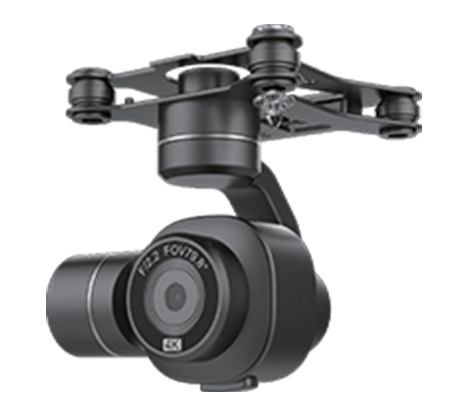
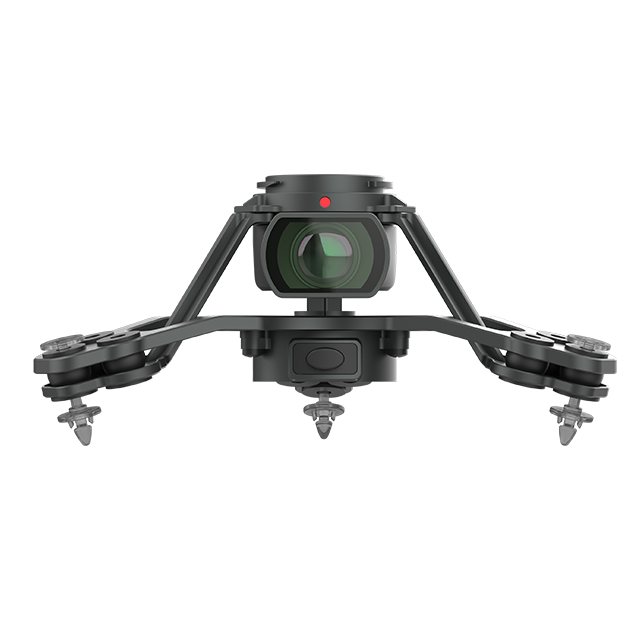
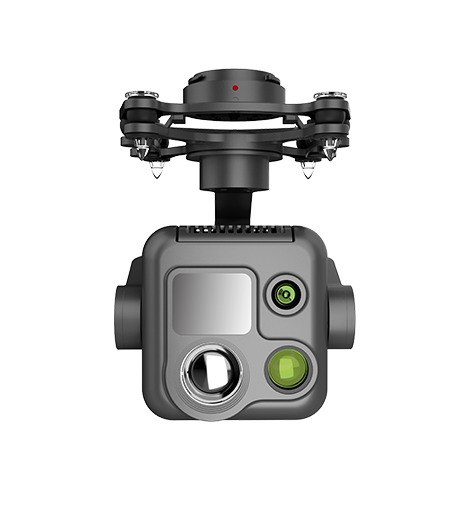 PQL02 Compact Quad-sensor Camera
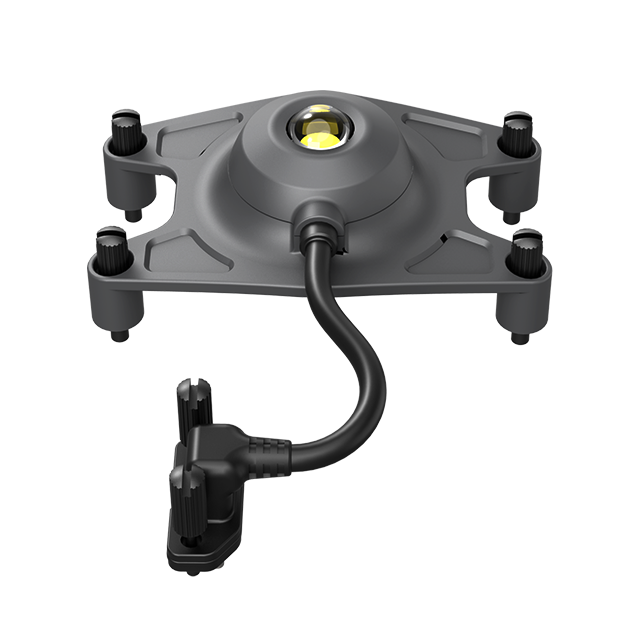
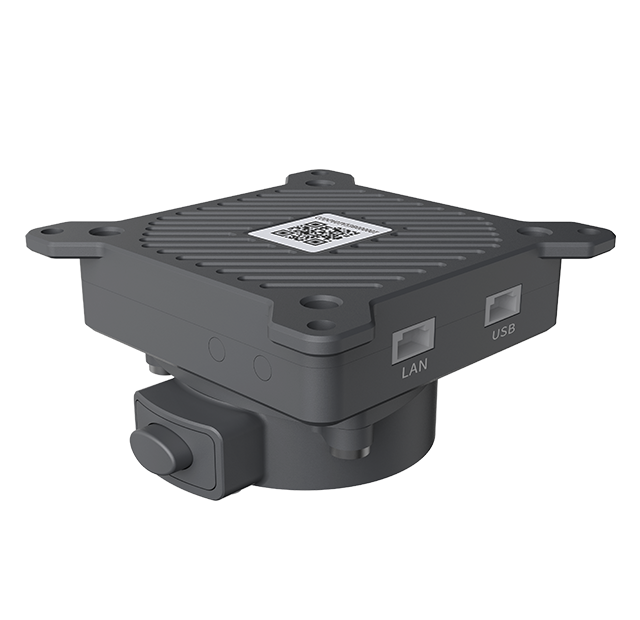 AGA01 Payload Adapter
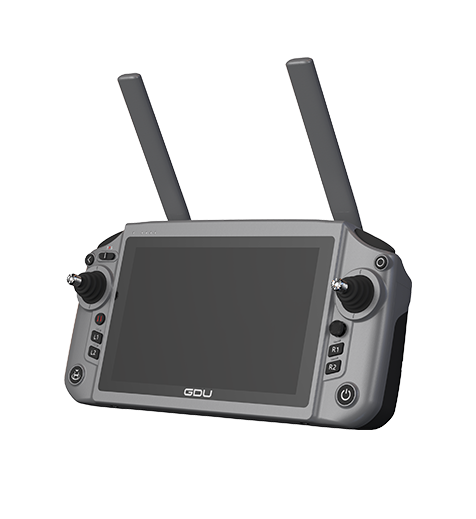 GDU RC SEE Smart Remote Controller