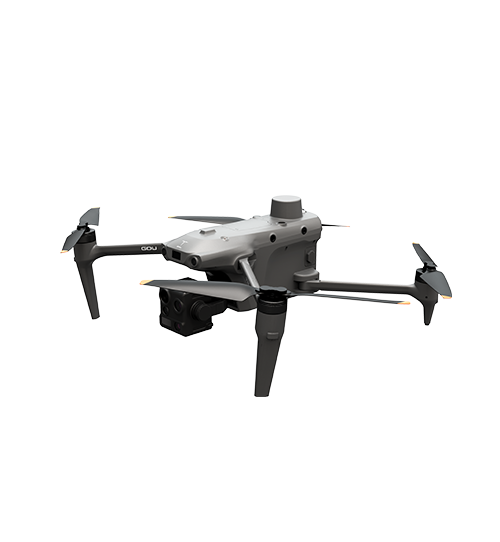
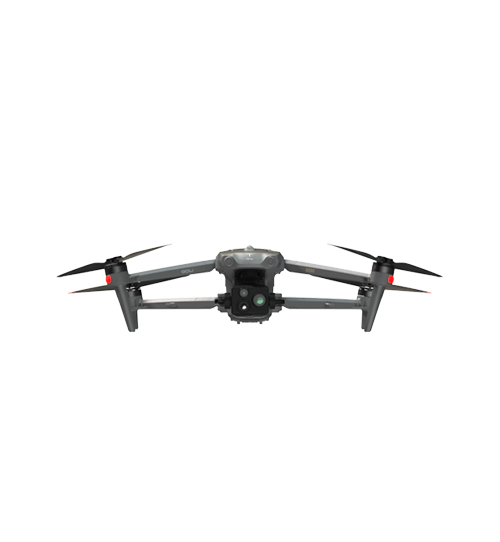
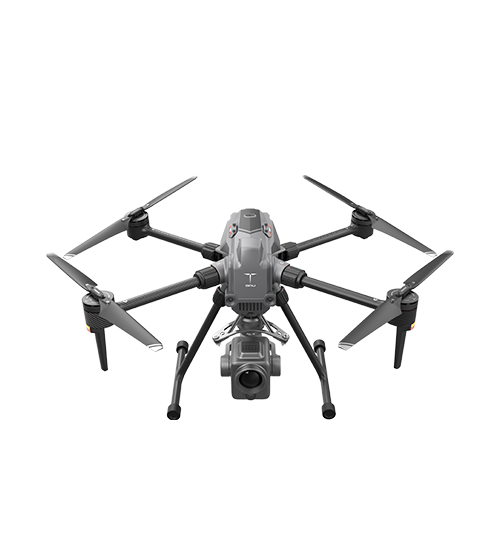
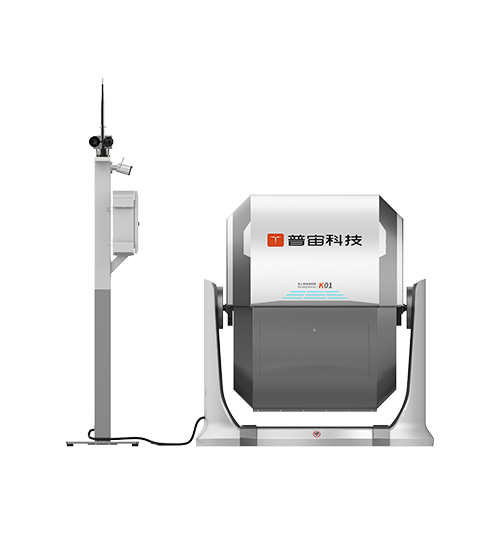
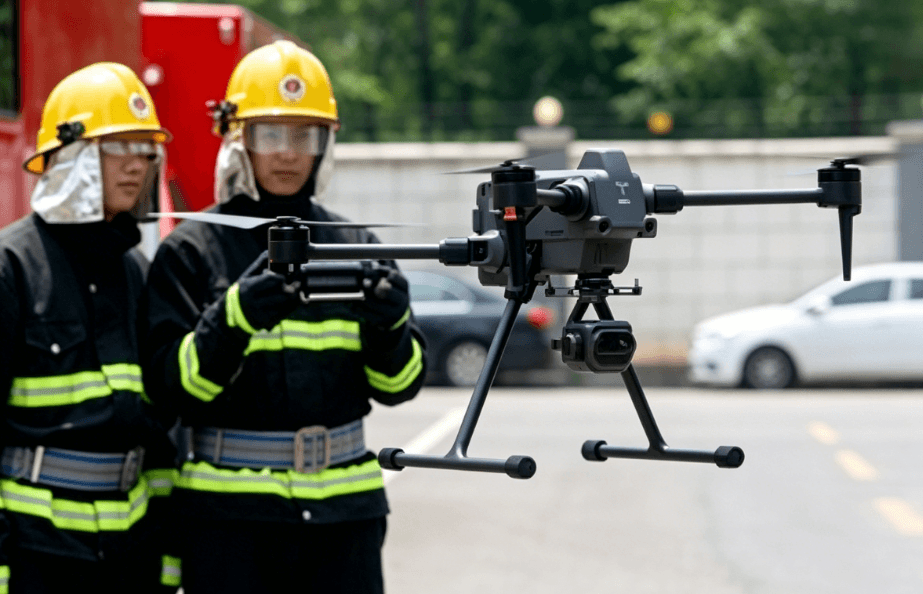
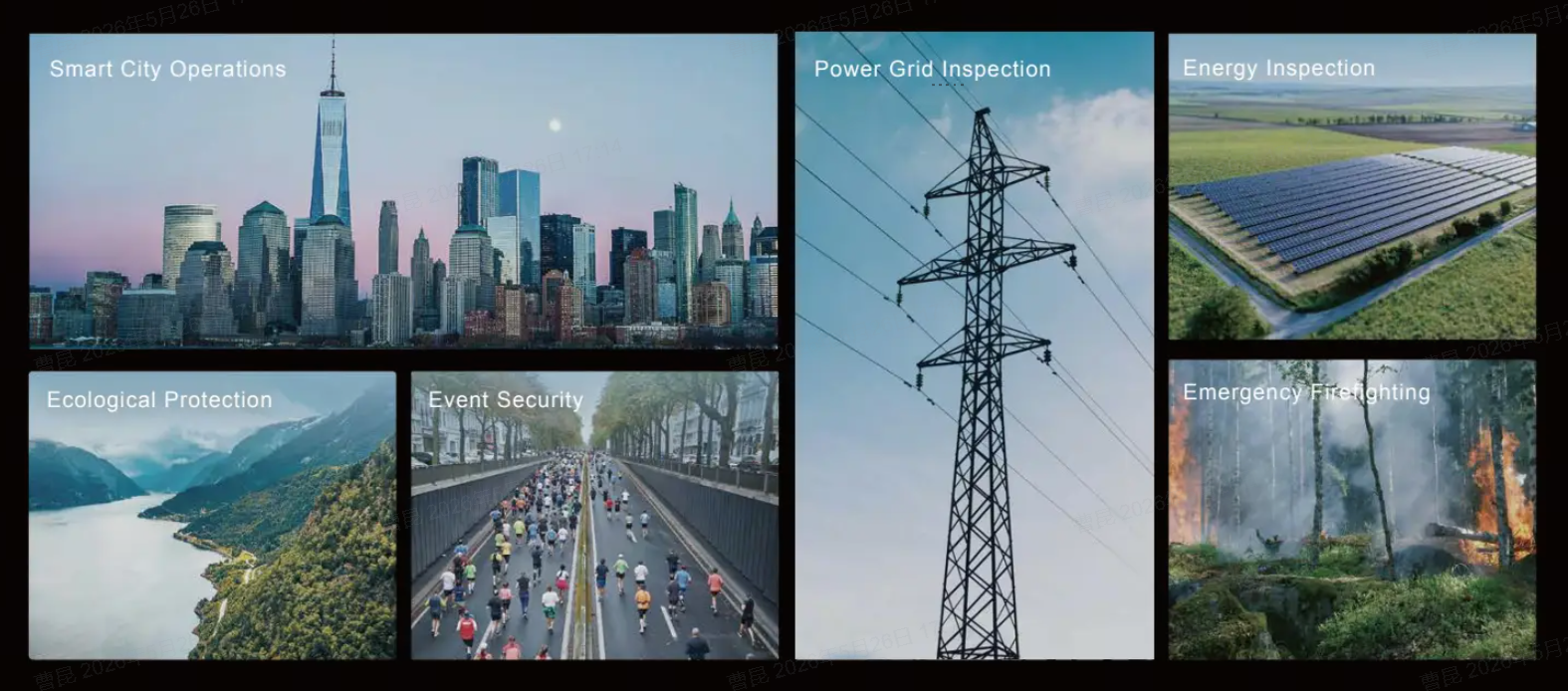
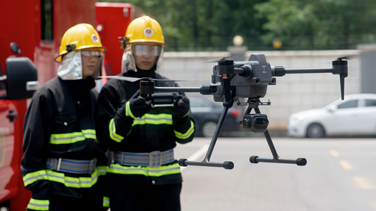
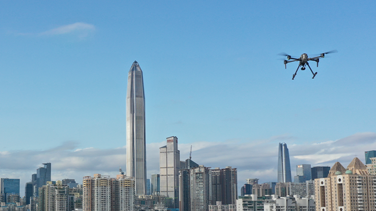
Modern industrial drones are more than just flying cameras. Their operational value comes from the specialized payloads they carry for specific tasks. These attachments, known as payloads, allow operators to gather data that is otherwise impossible to reach.Understanding different drone payload typesis essential for improving operational efficiency and mission success in industries such as energy, utilities, and public safety.
The versatility of an industrial drone largely depends on its modular payload system. Most enterprise-grade platforms now feature swappable gimbal systems. This allows a single aircraft to switch roles within minutes. By selecting the right sensor, businesses can transform a standard flight into a high-precision surveying or search-and-rescue operation.
What Are the Essential Drone Payload Types for Inspections?
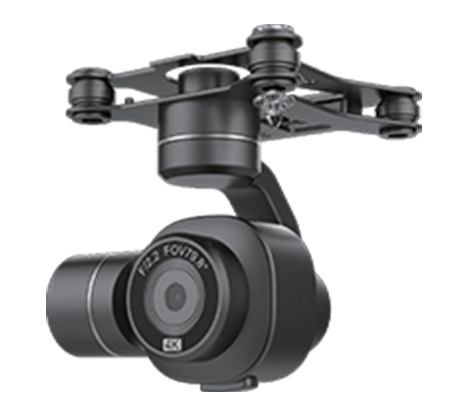
Visual imaging remains the most common requirement for industrial drone operations. High-resolution RGB cameras provide the clarity needed to inspect structural integrity or identify hardware serial numbers. Many professional payloads now offer 4K resolution and hybrid optical zoom capabilities to maintain safe distances from high-voltage assets.
Thermal imaging sensors are equally critical for utility and power grid maintenance. These payloads detect hot spots in electrical transformers or solar panels that indicate early-stage equipment failure. Modern dual-light payloads combine thermal and visual data into a single stream. This sensor-fusion capability allows pilots to overlay precise temperature readings directly onto high-definition images for enhanced situational awareness.
For high-accuracy distance measurement and tactical mapping, laser-based sensors have become an industry standard. Integrated Laser Rangefinders (LRFs) can capture the distance of a target from several kilometers away, allowing the system to calculate its precise geographical coordinates. This data is vital for emergency response teams and grid inspectors who must rapidly relay location telemetry to ground units.
Payload Category
Primary Technology
Common Industrial Use Case
Optical
High-Res RGB / Zoom
Structural inspection & security
Thermal
Infrared (IR) Radiometry
Power line & HVAC monitoring
Environmental
Gas Sensors / Sniffers
Leak detection & pollution tracking
Public Safety
Megaphones /Searchlights
Emergency response & crowd management
Advanced Multi-Sensor Drone Payload Types
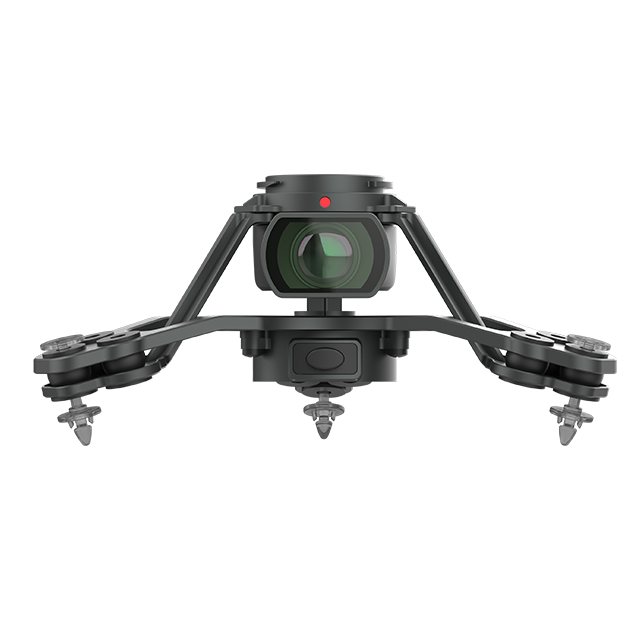
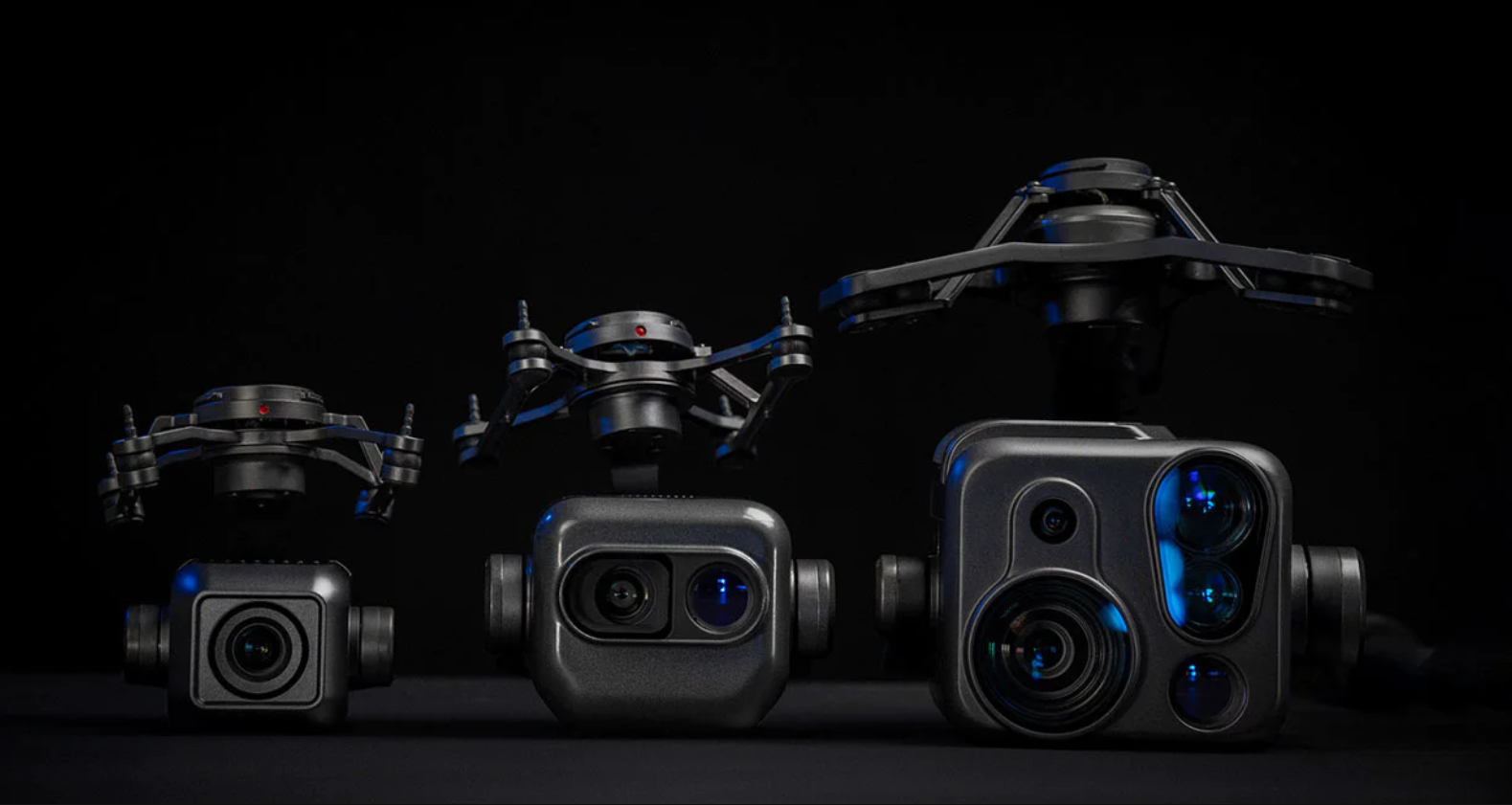
The industry is shifting toward multi-sensor payloads to maximize flight time efficiency. Instead of executing multiple flights with different single-sensor cameras, operators now deploy tri-sensor gimbals that consolidate an RGB camera, a radiometric thermal sensor, and a laser rangefinder into a single payload unit. These integrated drone payload types provide a comprehensive data set in one pass.
Advanced payloads often include Artificial Intelligence (AI) for automated tracking and recognition. AI-powered gimbals can lock onto a moving vehicle or person without manual pilot input. This capability is revolutionary for long-range surveillance and maritime search-and-rescue missions.
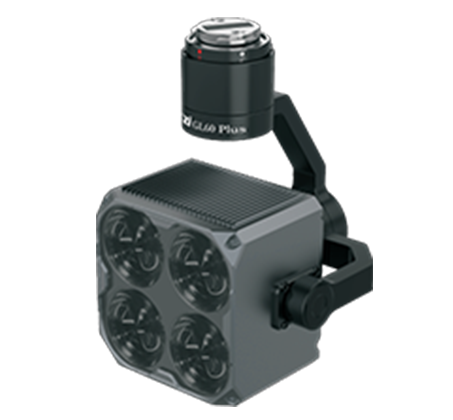
Size, Weight, Power, and Cost (SWaP-C) remain the core considerations in modern payload design. High-end multi-sensor payloads such as the PQL02 Compact Quad-sensor Camera are engineered to remain lightweight while delivering thermal imaging, optical zoom, and laser ranging capabilities. Efficient power management ensures the drone can stay airborne longer while processing complex data.
Specialized Sensors for Mapping and Monitoring
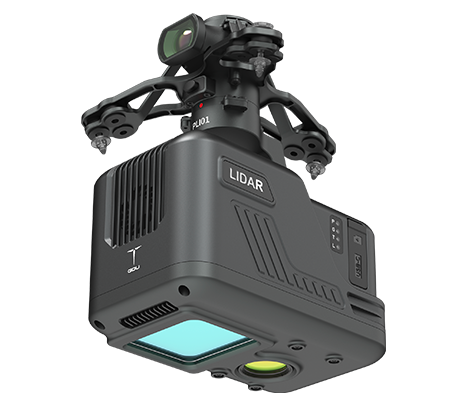
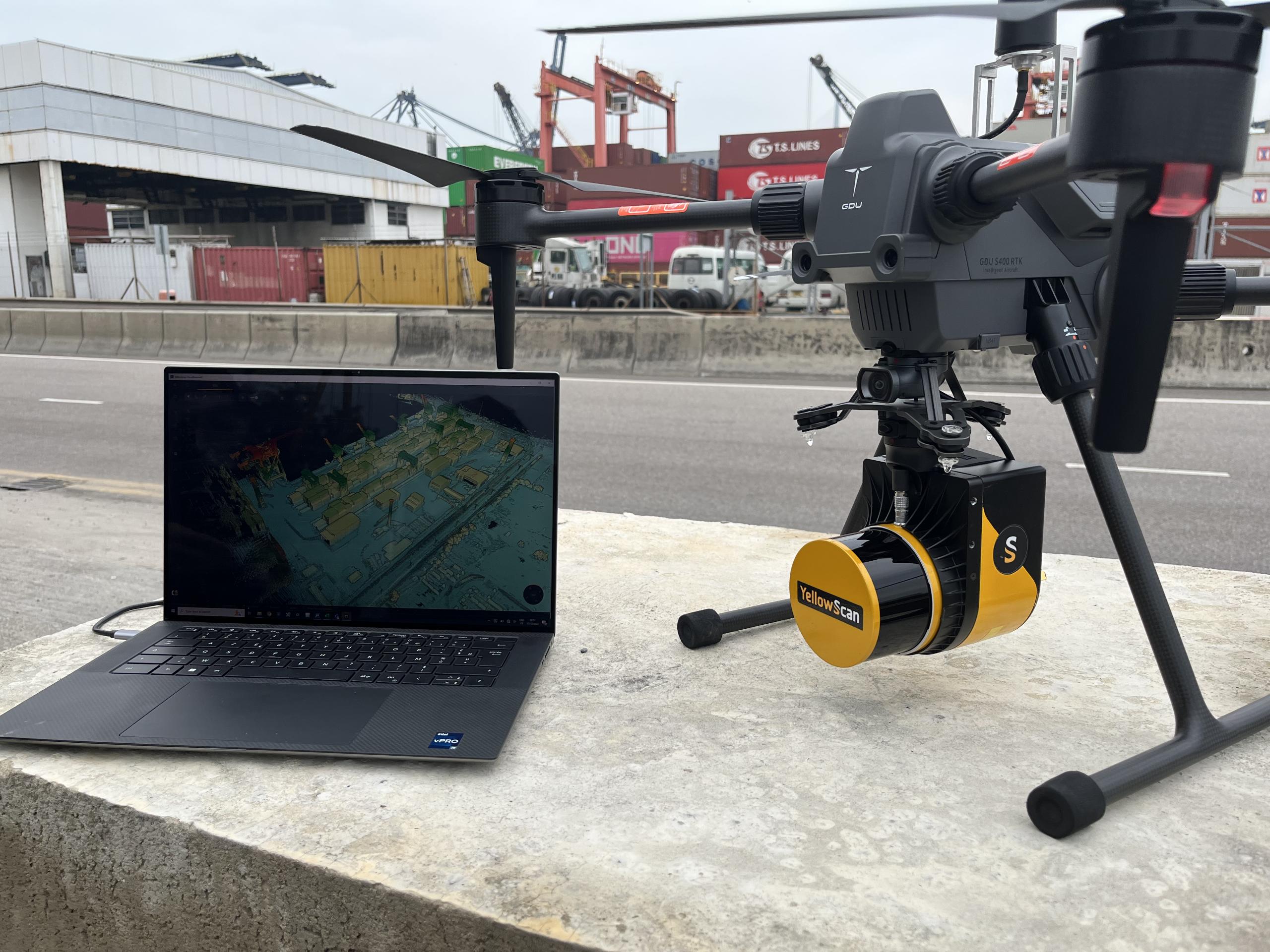
Mapping requires specialized drone payload types such as LiDAR and Oblique Cameras. LiDAR (Light Detection and Ranging) uses laser pulses to create 3D point clouds of the terrain. It can penetrate dense vegetation to map the ground surface, providing accuracy within 2 to 5 centimeters.
Environmental monitoring relies on gas detection payloads that detect specific chemical compositions. These sensors can identify leaks of methane, carbon monoxide, or volatile organic compounds (VOCs). They are indispensable for oil and gas refineries where manual inspections pose high risks to human life.
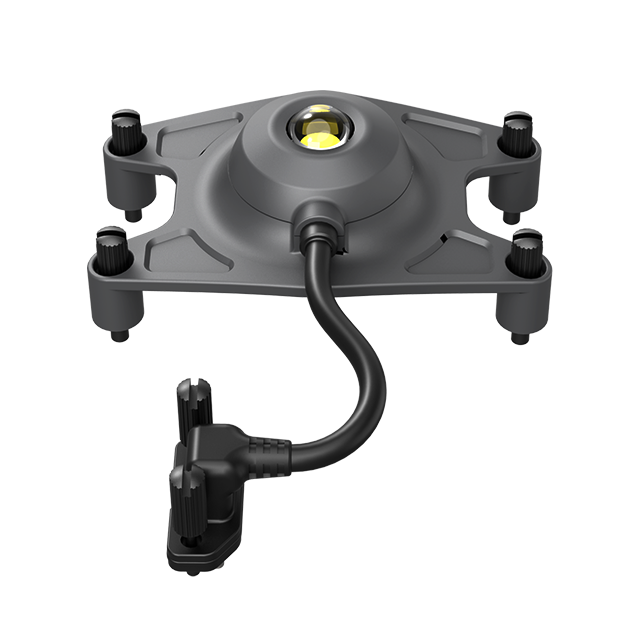
Public safety agencies often utilize "active" payloads rather than just sensors. High-intensity searchlights can illuminate large areas during night missions. Powerful megaphones allow operators to broadcast instructions to crowds or communicate with stranded individuals during natural disasters.
How to Select the Ideal Payload for Your Mission
Choosing the right equipment depends on the specific goals of your project. You must first determine if you need visual evidence, thermal data, or physical measurements. The compatibility of the payload interface is the most critical technical factor.
Standardized interfaces allow for seamless integration between the drone and the sensor. Look for platforms that offer open SDKs or universal gimbal ports to avoid being locked into a single brand. This flexibility ensures your fleet can adapt as sensor technology improves over time.
Weight capacity is another "make-or-break" factor for industrial drones. Every gram added to the payload reduces the total flight time of the aircraft. Always verify that the combined weight of the gimbal and sensor stays within the manufacturer’s recommended limits for stability.
Finally, consider the environmental durability of the payload. Industrial environments often involve dust, rain, or extreme temperatures. Ensure your drone payload types carry an appropriate IP rating, such as IP44 or IP45, to prevent hardware failure during critical missions.
Summary
The diverse range of drone payload types allows industries to digitize their workflows with unprecedented precision. From thermal sensors detecting heat leaks to LiDAR systems creating 3D maps, these tools improve operational efficiency and reduce inspection risk. Selecting a modular platform with high-quality sensors is the best way to future-proof your drone operations.
FAQ
What are drone payload types used for in the power industry?
They are primarily used for thermal inspections and high-zoom visual checks. These sensors help technicians find overheating components or physical damage on power lines without climbing towers.
How much weight can industrial drone payloads typically carry?
Standard industrial drones usually carry payloads ranging from 500g to 5kg. The specific capacity depends on the drone's motor power and the desired flight endurance for the mission.
Can I use multiple drone payload types at the same time?
Yes, many modern drones support multi-gimbal configurations or integrated multi-sensor payloads. This allows for the simultaneous collection of thermal, visual, and laser ranging data during a single flight.
What is the benefit of a laser rangefinder payload?
Laser rangefinders provide precise distance measurements and GPS coordinates of distant objects. This is crucial for topographical mapping, tactical planning, and identifying the exact location of infrastructure defects.


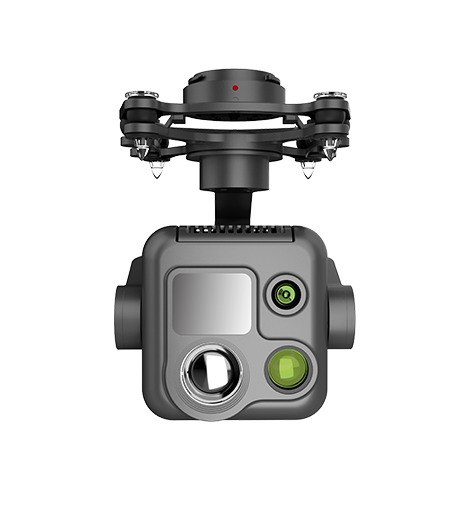 PQL02 Compact Quad-sensor Camera
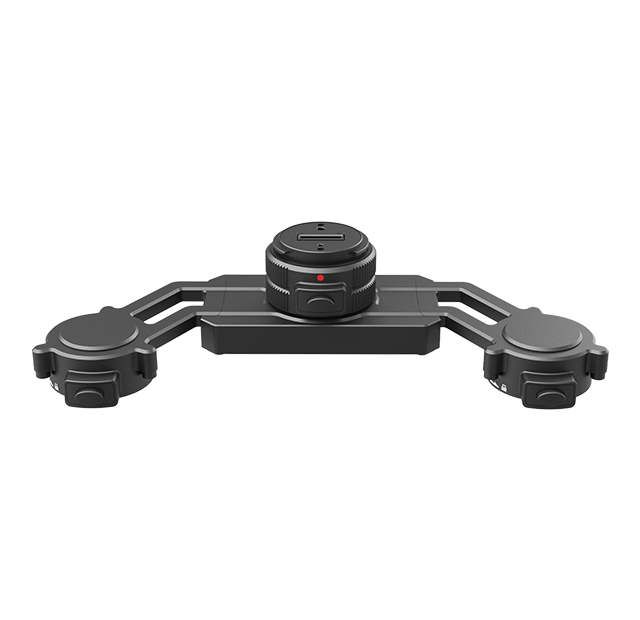
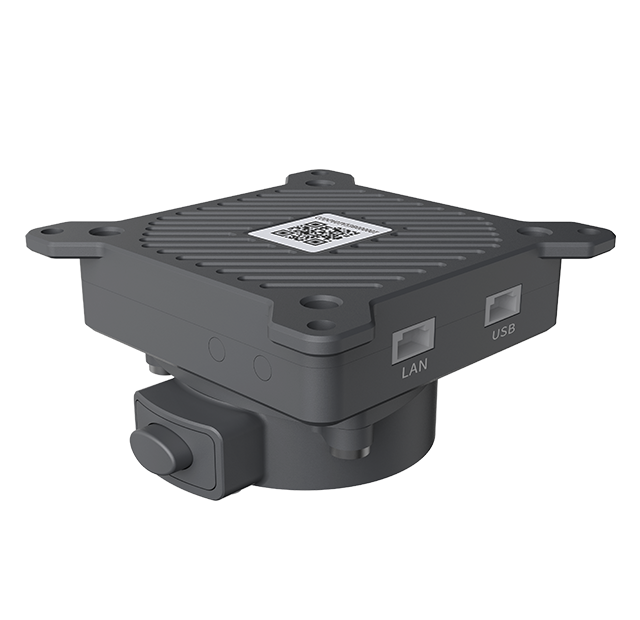 AGA01 Payload Adapter
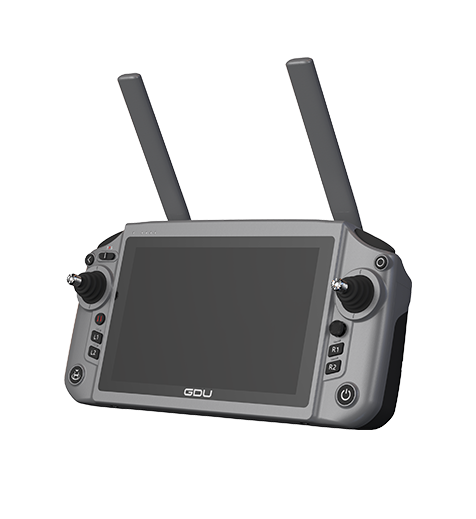 GDU RC SEE Smart Remote Controller